

What is Squamous Cell Skin Cancer?
Squamous cell skin cancer (SCSC) generally develops from cumulative lifetime exposure to ultraviolet (UV) radiation and damage to the skin. It is the second most common type of skin cancer diagnosed in the United States, after basal cell carcinoma.
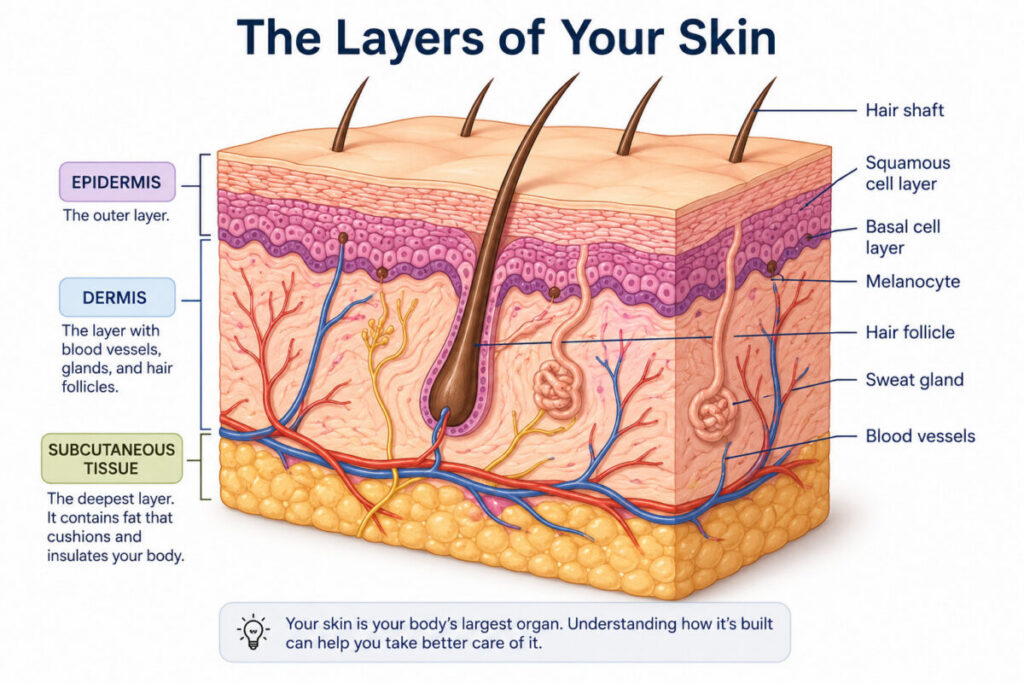
The outer layer of the skin, called the epidermis, is primarily made up of basal cells, squamous cells, and melanocytes. Squamous cells are thin, flat cells located near the surface of the skin. As part of the skin’s normal renewal process, older squamous cells are continuously shed and replaced by new cells.
When squamous cells grow uncontrollably and become cancerous, they form squamous cell skin cancer. This type of skin cancer usually grows slowly and most often develops on areas of the body frequently exposed to the sun, such as the scalp, ears, face, neck, and backs of the hands. Squamous cell skin cancer may appear as a sore that does not heal, a rough or scaly red patch, or a raised growth on the skin.
Although many squamous cell skin cancers are highly treatable when found early, some cases can become advanced or spread to nearby lymph nodes or other parts of the body. Treatment for advanced squamous cell carcinoma may include surgery, radiation therapy, immunotherapy, or other systemic therapies.
Nomenclature: Squamous cell skin cancer vs. cutaneous squamous cell carcinoma
NOTE: On this website, we use the term squamous cell skin cancer (or the abbreviation SCSC) to clarify we are talking about squamous cell carcinoma as it occurs on the skin. Squamous cells line tissues inside and
outside of the body, so squamous cell carcinomas can develop in other parts of the body, outside of the
skin and unrelated to ultraviolet light exposure, including in the lung, anus, and mouth. You might also
recognize the term cutaneous squamous cell carcinoma—another way of describing squamous cell skin
cancer.