

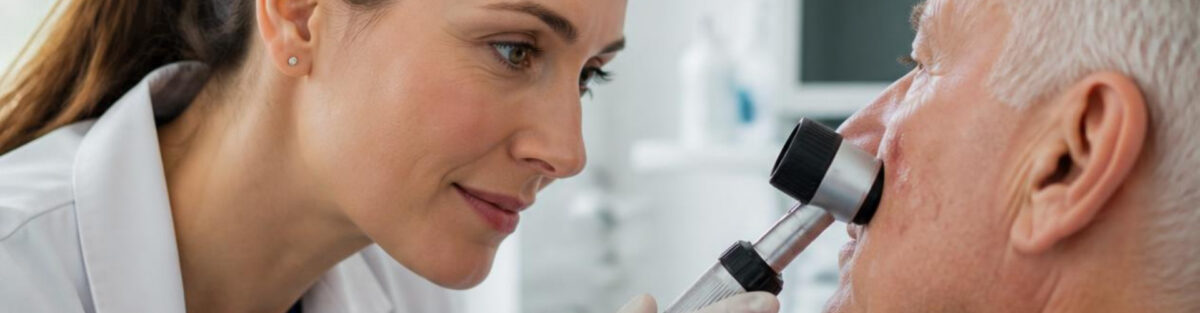
Skin cancer is the most common type of cancer in the United States — more than 5 million new cases are diagnosed each year, more than all other cancers combined. And basal cell carcinoma (BCC) is the most common type of skin cancer.
The good news: BCC is highly treatable when it’s found early. The key is knowing what to look for, understanding what a diagnosis means, and acting on changes in your skin promptly.
That’s why we created a new three-part animated video series on basal cell carcinoma. In about five minutes total, the series covers what BCC is, the warning signs to watch for, how it’s staged, and what comes next. Watch all three here, or share them with someone who needs to see them.
1. What Is Basal Cell Carcinoma — and What Should You Look For?
BCC develops in the basal cells, found at the base — the deepest layer — of the epidermis, the outer layer of your skin. It most often appears on areas that get the most sun: the face, neck, scalp, ears, arms, and legs. But it can show up anywhere.
The warning signs are easier to spot once you know them. In the first video, you’ll learn what BCC looks and feels like, who is most at risk, and when to bring a spot to your healthcare provider.
In this video you’ll learn about:
- What basal cell carcinoma is and where it develops
- Where BCC commonly appears on the body
- Risk factors, including sun exposure, tanning bed use, fair skin, age, and family history
- The warning signs: sores that don’t heal, red or scaly patches, shiny bumps or nodules, scar-like areas that are flat, white, yellow, or waxy, pink growths, and glossy brown or black growths with a rolled border
- Why regular skin checks and early diagnosis matter
2. What Are the Stages of Basal Cell Carcinoma?
Not every BCC is the same. In the second video, we break down the three stages of BCC — low-risk, high-risk, and advanced — and explain what each one means for diagnosis, the risk of recurrence, and treatment.
In this video you’ll learn about:
- The three stages of BCC: low-risk, high-risk, and advanced
- What “low-risk BCC” means — often described as nodular or superficial on a pathology report — and why it carries a low risk of recurrence
- What can move a BCC into the high-risk category, such as immunosuppression or prior medical radiation therapy in the area
- What advanced BCC is: cancer that has spread into muscles, nerves, bones, or lymph nodes, or to a distant location in the body, and why it requires more treatment methods to control
3. How Is Basal Cell Carcinoma Treated?
In the third video of the series, we walk through what treatment looks like after a BCC diagnosis — and why early diagnosis helps ensure prompt, appropriate treatment.
In this video you’ll learn about:
- The treatment options for low-risk BCC, including surgical removal (excision, Mohs surgery, and curettage and electrodesiccation), topical therapies, and radiation therapy
- How healthcare providers determine which treatment is right based on the tumor’s size, location, and stage
- Why Mohs surgery offers the highest cure rate while preserving the most healthy skin
- Treatment options for advanced BCC, including systemic therapies such as hedgehog pathway inhibitors and immunotherapy
- Follow-up care after treatment, including regular skin checks, and skin cancer risk after a BCC diagnosis
Frequently Asked Questions About Basal Cell Carcinoma
What is basal cell carcinoma?
Basal cell carcinoma (BCC) is the most common form of skin cancer in the U.S. It develops in the basal cells, which sit at the base of the epidermis — the outer layer of the skin — and normally replicate to produce new skin cells. When basal cells grow out of control and become cancerous, they develop into BCC.
What does BCC look like?
BCC can look different from person to person. Warning signs include a sore that doesn’t heal, a red scaly patch or irritated area, a shiny bump or nodule, a flat, white, yellow, or waxy scar-like area, a pink growth, or a brown or black glossy growth with a rolled border. Because skin cancers look different on different skin tones, any new or changing spot is worth having checked.
Where does BCC usually appear?
BCC most commonly appears on the parts of the body most exposed to the sun, such as the face, neck, scalp, ears, arms, and legs. It can also appear in other areas.
Who is most at risk for BCC?
The main risk factors are sun exposure, tanning bed use, fair skin, age, and family history. People who are immunosuppressed or who have had medical radiation therapy to an area of skin are also at higher risk of more aggressive disease.
What are the stages of BCC?
BCC is described in three stages. Low-risk BCC — often called nodular or superficial on a pathology report — has a low risk of recurrence. High-risk BCC may occur in people who are immunosuppressed or who have had prior radiation therapy to the area, and carries a higher risk of recurrence. Advanced BCC is when the cancer has spread into muscles, nerves, bones, or the lymph nodes, or to a distant location in the body, and it requires more treatment methods to control.
Is BCC serious? Can it spread?
BCC generally grows slowly and is usually very treatable when addressed early on. It is rare for BCC to spread outside of the skin, but it is possible — which is why prompt attention is always warranted.
Is BCC curable?
BCC is highly treatable when diagnosed early. Early diagnosis is important to ensure prompt and appropriate treatment, so it’s important to see your healthcare provider for skin checks and to alert them about anything you see that is concerning.
I’ve been diagnosed with BCC. What should I do now?
Follow your healthcare provider’s recommended treatment and follow-up plan. People who have had BCC have an increased risk of developing other skin cancers, so it’s important to be even more careful going forward: keep up regular skin checks and report any new or changing spots promptly.
How often should I check my skin?
Become familiar with the moles, lesions, and spots on your skin, and perform a skin self-exam from head to toe once a month. Also visit your physician or dermatologist for a complete body skin exam at least once a year.
Where can I learn more or find a specialist?
Visit our Basal Cell Carcinoma page for detailed, patient-friendly information, or use our specialist database to find a doctor experienced in treating skin cancer.

Recent Posts

Oct. 22, 2026
Does Every Skin Cancer Need Surgery?

Oct. 01, 2026
Introducing Question of the Month: Quick Answers to Your Skin Cancer Questions

Sep. 23, 2026
Cutaneous Squamous Cell Carcinoma Explained: Watch Our New 3-Part Animated Video Series

Sep. 17, 2026
FDA Approves First Photodynamic Therapy for Basal Cell Carcinoma
Sep. 16, 2026