

Skin cancer is becoming more common, especially among older adults who have spent decades working outdoors, gardening, golfing, walking, driving, or simply enjoying time in the sun before we fully understood the long-term effects of ultraviolet (UV) exposure.
During AIM at Skin Cancer’s recent webinar, “The Rising Toll: Understanding the Surge in Skin Cancer Mortality,” we invited Wesley Yu, M.D., to discuss why rates continue to rise, how sun damage builds over time, and what patients can do now to better protect themselves and detect skin cancer early.
One important message was clear throughout the conversation: it is never too late to protect your skin.
Here are some of the key insights from the discussion.
Skin Cancer Is More Common Than Many People Realize
Many people are surprised to learn that skin cancer is the most common cancer in humans. Basal cell carcinoma and squamous cell carcinoma occur so frequently that they are not always fully captured in national cancer statistics.
When all skin cancers are considered together — including melanoma — they affect more people than any other type of cancer combined.
For many older adults, this is not necessarily the result of recent sun exposure. Skin damage often develops slowly over decades and may not appear until later in life.
Years of Sun Exposure Add Up
The webinar discussed how skin cancer develops through a combination of:
- UV exposure
- Age
- Genetics
People who burn easily, have fair skin, light eyes, or a history of repeated sunburns may have a higher risk. Indoor tanning beds were also discussed as a significant risk factor, particularly for melanoma.
Many adults today grew up during a time when sunscreen was rarely used and tanning was encouraged. Long summer days outdoors, baby oil, iodine, and sunburns were common experiences for many families.
We now understand much more about how those years of UV exposure can affect the skin later in life.
Prevention Still Matters — Even After a Skin Cancer Diagnosis
One of the most important parts of the discussion focused on a common question many patients ask: “If I already have sun damage or have already had skin cancer, does protection still matter?”
The answer is yes.
Even though past sun damage cannot be erased, protecting your skin now may help reduce future skin cancers and slow how often new ones develop.
Simple habits can help:
- Sit in the shade when possible
- Wear hats and protective clothing
- Use UPF clothing outdoors
- Apply sunscreen regularly
- Reapply sunscreen throughout the day
Dr. Yu also emphasized trying to avoid direct sun during the strongest UV hours, especially during “the blazing heat of 10 to 2.”
Another important reminder: sunscreen only works well when enough is applied and when it is reapplied regularly, especially after sweating or swimming.
Early Detection Can Save Lives
The discussion also focused heavily on early detection.
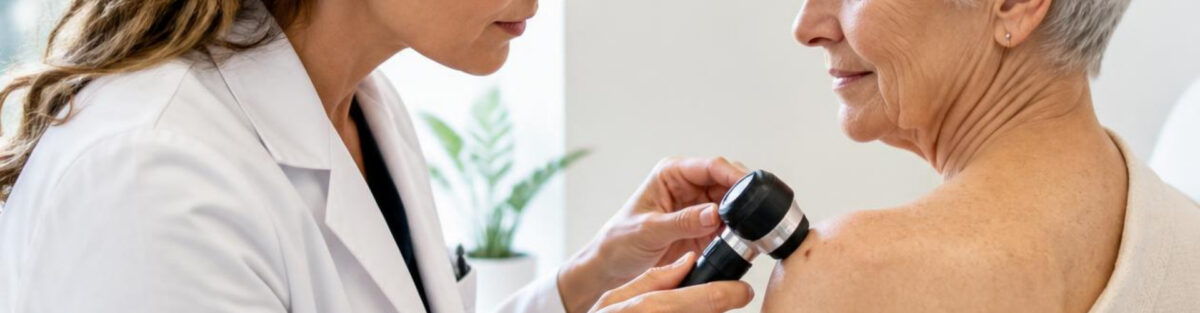
Skin cancers found early are often easier to treat and have much better outcomes. That is why regular skin exams — both at home and with a dermatologist — are so important.
Patients were encouraged to watch for:
- Spots that bleed or do not heal
- New growths
- Changing moles or lesions
- Areas that crust, itch, or grow
- Spots that look different from others nearby
Even small changes can matter.
Dr. Yu encouraged people to become familiar with their own skin so they can recognize when something changes over time.
Skin Cancer Can Affect Every Skin Tone
The webinar also addressed an important misconception: people with darker skin tones can still develop skin cancer.
Although skin cancer may be less common in people with skin of color, it can still occur and may sometimes be diagnosed later because it is not immediately suspected.
Everyone should monitor their skin and seek medical evaluation for suspicious changes regardless of skin tone.
If You Cannot Get a Dermatology Appointment Quickly
Many patients experience long wait times for dermatology appointments, sometimes several months.
If you notice a spot that is changing, bleeding, or causing concern:
- Contact your primary care provider
- Ask about urgent “spot check” visits
- Consider teledermatology options if available
- Continue advocating for yourself
The webinar stressed that patients know their own bodies best and should never feel uncomfortable speaking up about a concerning lesion.
A Reminder for Patients and Families
For many older adults, sun exposure was simply part of everyday life long before the dangers of UV radiation were widely discussed. The goal is not guilt or blame.
What matters most now is awareness.
Regular skin checks, paying attention to changes, protecting your skin when outdoors, and seeking care early can all make a meaningful difference.
Recent Posts

Oct. 01, 2026
Introducing Question of the Month: Quick Answers to Your Skin Cancer Questions

Sep. 23, 2026
Cutaneous Squamous Cell Carcinoma Explained: Watch Our New 3-Part Animated Video Series
Sep. 17, 2026
FDA Approves First Photodynamic Therapy for Basal Cell Carcinoma

Sep. 16, 2026
Basal Cell Carcinoma Explained: Watch Our New 3-Part Animated Video Series

Sep. 01, 2026