
Improving Skin Cancer Awareness in America’s Fields
By Mara Klecker
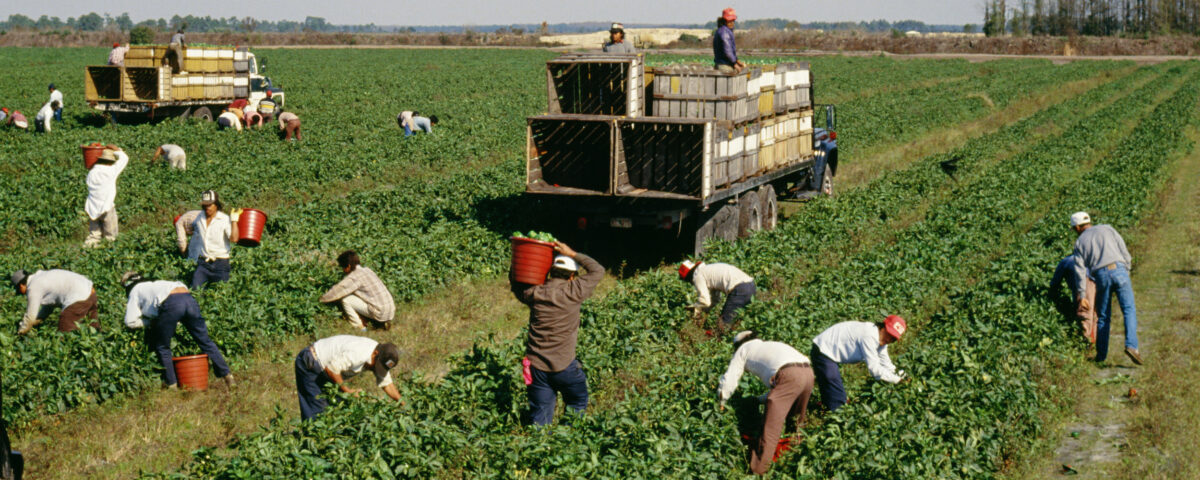
Every day, about 2.5 million farmworkers in the United States – over 4 million when you count their families – spend hours under the sun planting, harvesting and tending the crops that feed the country. The work is essential to the nation’s food supply, but it also places agricultural workers at increased risk of developing skin cancer.
Research has found that outdoor workers are 77% more likely to develop cutaneous squamous cell carcinoma and 43% more likely to develop basal cell carcinoma than people who work indoors.
Studies have also found that Latino populations, who make up the majority of U.S. farmworkers, report lower awareness of melanoma and other skin cancers than non-Latinos with similar access to healthcare. They are less likely to perform skin self-examinations, less familiar with the warning signs of skin cancer and more likely to receive a diagnosis after the disease has progressed.
But skin cancer prevention campaigns haven’t often been designed with farmworkers in mind. Many focus on sun safety during outdoor recreation such as swimming or hiking vs while working, and educational materials for outdoor workers are often available only in English—even though most U.S. farmworkers are Spanish-speaking.
Many farmworkers also live in rural communities where access to healthcare, particularly specialty care such as dermatology, can be limited. That makes culturally relevant education and early awareness all the more critical.
A partnership between AIM at Skin Cancer and Farmworker Justice aims to help change that. The organizations have developed bilingual educational materials in English and Spanish, trained community health workers and clinicians, launched a bilingual national social media campaign, and created resources specifically designed for agricultural workers.
Farmworker Justice is a national nonprofit organization based in Washington, D.C., founded in 1981. It seeks to empower farmworkers and their families to improve their living and working conditions through programs, impact litigation, and policy/advocacy. We work with farmworkers, rural communities, and a diverse array of community-based organizations across the nation. Farmworker Justice addresses a variety of issues agricultural workers face through a diverse array of programs, including occupational health and safety, such as heat stress and pesticide safety; emergency preparedness, such as wildfire preparedness and mitigation trainings; and health equity, such as increasing health care access, skin cancer prevention and treatment, and nutrition and food access trainings.
Unlike many workers who can move indoors or step into the shade during the hottest part of the day, agricultural workers often spend entire shifts outside during peak ultraviolet exposure.
“They’re not afforded the same types of protections that other indoor workers are,” said Rebecca Young, Director of Programs at Farmworker Justice. “They are not able to seek shade during the hottest hours of the day.”
Long shifts and limited breaks make it difficult to reapply sunscreen or seek shade. Some workers are also exposed to pesticides while working in the fields, which increases their chances of developing skin cancer. Getting medical care can also be difficult. Many agricultural communities have few dermatologists, while transportation challenges, lack of insurance and language barriers can all delay diagnosis and treatment.
Misconceptions can make those barriers even harder to overcome. Some workers also believe a “base tan” offers protection from skin cancer, while others view sunscreen as merely cosmetic.
“One of the biggest misconceptions is that if you have darker skin, you won’t get skin cancer and you don’t need to worry about burning or protecting yourself,” said Laura Nadal, Senior Project Coordinator at Farmworker Justice. That means skin cancer on those with darker skin is often diagnosed at a later stage, she said.
Nadal said misconceptions like those underscore why culturally relevant education is so important, particularly because many skin cancers can be prevented or treated successfully when they’re detected early.
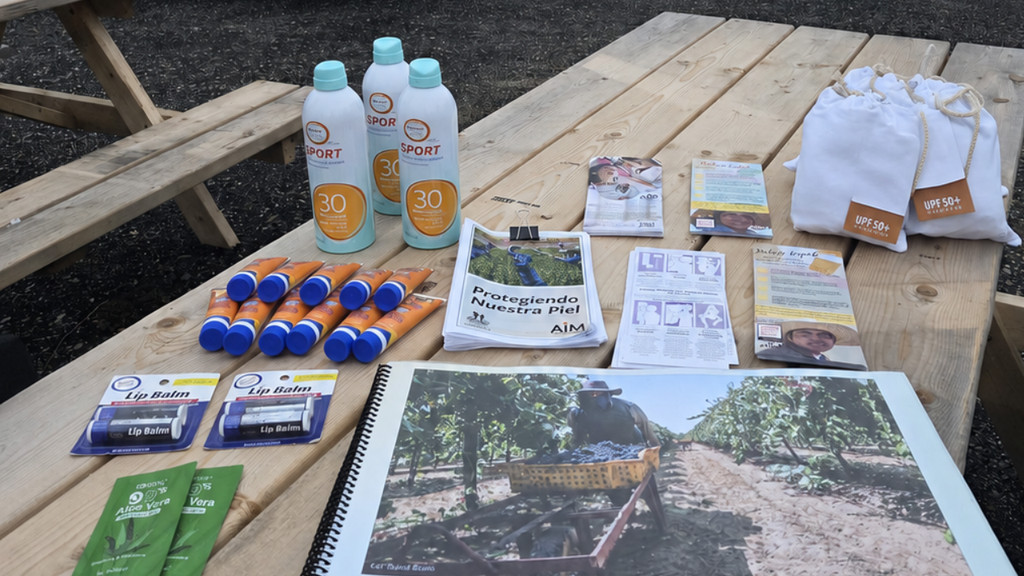
Rather than simply translating a traditional public awareness campaign, AIM at Skin Cancer and Farmworker Justice are developing a bilingual toolkit specifically for farmworkers and other outdoor workers. The materials—including training curricula, brochures, and visual guides—have been designed to reflect the realities of agricultural work and to support community health workers who will use them in the field.
“Community health workers are vital to help bridge that knowledge gap because they are either part of the community or have spent years building trust with farmworkers,” Nadal said.
The partnership also recognizes that education must extend beyond the farmworkers themselves. In many rural communities, primary care providers—rather than dermatologists—are often the first healthcare professionals farmworkers see. The project includes training to help clinicians recognize skin cancer risks among outdoor workers and identify suspicious moles. National webinars, a bilingual social media campaign, and free online resources ensure that those materials are available to health centers, outreach organizations, and communities across the country.
The project is still in its pilot phase but both organizations, along with pilot partners, Kinston Community Health Center and Maine Mobile Health Program, hope the work continues well beyond this year. Longer term, the aim of the partnership is to help close a gap that has existed for years: ensuring farmworkers have the same access to skin cancer education as other populations.
“We want to see more workers who have the knowledge to take positive measures to protect their skin,” Young said. “We also want to ensure that health care is more accessible to farmworkers by providing clinicians with the tools to offer culturally and linguistically accessible care for this community.”
For Sam Guild, president of AIM at Melanoma and AIM at Skin Cancer, the partnership also reflects a broader lesson about public health. Effective education efforts begin by listening to the people they’re trying to reach and working alongside organizations that are already in the community.
“Our goal is to make sure all communities have access to information about how to better protect themselves,” she said. “We want clinicians and outreach workers to have the knowledge and the resources that they need to support farm workers and help save lives.”
Recent Posts

Oct. 01, 2026
Introducing Question of the Month: Quick Answers to Your Skin Cancer Questions
Sep. 23, 2026
Cutaneous Squamous Cell Carcinoma Explained: Watch Our New 3-Part Animated Video Series
Sep. 17, 2026
FDA Approves First Photodynamic Therapy for Basal Cell Carcinoma
Sep. 16, 2026
Basal Cell Carcinoma Explained: Watch Our New 3-Part Animated Video Series
Sep. 01, 2026